

*Even though I am a registered nurse, I am NOT a doctor nor a nutritionist, so anything you read here and interpret in your own way should be discussed with your primary care doctor before making any diet modifications, as our individual bodies react differently to the foods and liquids we ingest.*
As I was looking at the back of a beverage can this past week, I was once again scanning the ingredients list on it to see if this particular item had real sugar or a sugar substitute, or even “unnatural” food coloring. I find myself doing this a lot. As a general rule of thumb, I avoid sodas or foods that don’t have any real nutritional value, however, I feel that anything in moderation is generally okay. Having said that, sometimes I try to avoid certain ingredients altogether. I will say that it’s exhausting having to constantly review food ingredient labels, but I feel it’s very necessary to do so for my own health and longevity. Also, if I see that something has more than a handful of ingredients, that’s probably a red flag, and I have to ask myself why it needs to have so many ingredients.
According to this article, Vermont is the healthiest state in the country, based on low pollution levels, high life expectancy, and an abundance of green spaces, gyms, and health food stores. Cigarette smoking also holds low at 13.2% and life expectancy is high at 78.4 years. Something to be proud of! With this in mind, it’s important to consider what we put into our bodies and the effect all of it has on our health. This can also include where we live (think environmental pollution).
When it comes to real sugars, type 1 and type 2 diabetics do need to be careful with how much they ingest due to their perpetually fluctuating blood sugar levels. Being conscious of what other “real” foods we and diabetics put into our bodies can help, however. Taking in enough protein can help slow down glucose absorption, and eating real fruit instead of drinking juice is generally better because fruit has soluble fiber, which turns into a gel-like substance and slows down the absorption of sugar. Ingesting too much real sugar can also contribute to inflammation, along with weight gain. If you are already a diabetic, then drinking juice or eating crackers in a pinch is the way to go in order to rapidly increase your blood sugar level if it’s too low, say, below 65-70 milligrams per deciliter (mg/dL). In the hospital, we were taught to recheck your blood sugar 15 minutes after a low reading and after drinking about 120mL of juice, and if it’s VERY high (over 280 mg/dL), then recheck your blood sugar two hours later to see if it’s come down. We don’t want anyone going into a coma.
Let’s briefly talk about the glycemic index (GI) for foods. It’s a scale that goes from 0-100, and it indicates how quickly your blood sugar will rise. The closer to 100 a food gets on the scale, those are typically low in fiber and high in carbohydrates and sugars. On the lower end of the scale, the foods are typically rich in dietary fiber, protein, fat, or a combination of these nutrients. When you ingest sugars, the liver converts fructose and galactose into glucose, allowing that fuel (or energy) to be transported to all the cells in the body.
Insulin is a hormone and is produced in the pancreas. The pancreas then detects what the blood sugar level is after the liver does its part and it releases the appropriate amount of insulin to regulate how much sugar is absorbed into the cells for energy (unless you’re a diabetic, then things get a little screwy. Excess sugar makes its way through the kidneys and is peed out. Have you ever noticed when a diabetic is very thirsty and they’re peeing a lot? Their blood sugar is probably elevated. They drink water to help dilute their current blood sugar level and they’re peeing a lot because the body is doing what it can to get rid of the excess sugar.
The glycemic indices listed below and short analyses for each sugar and sugar substitute are from these websites:
1. https://thedietitianprescription.com/glycemic-index-sweeteners-chart/
Please remember that these are very basic descriptions of each:
White sugar: GI=65. A refined sugar that contains glucose and fructose and is extracted from sugar cane or sugar beet plants.
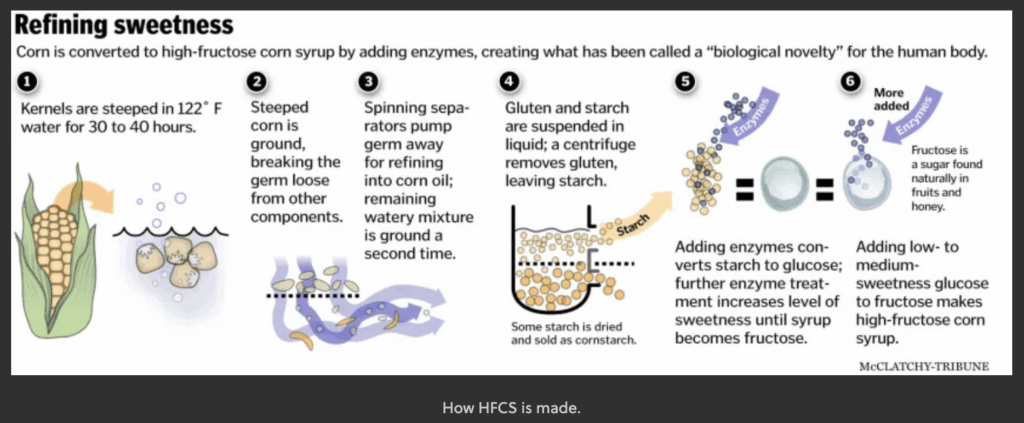
High Fructose Corn Syrup: GI=62-68. Its ubiquity is astounding but not surprising in our country. It’s found in so many food products, but is terrible for diabetics because of blood sugar spikes, and it’s terrible for the rest of the population because it can also contribute to fatty liver disease, heart disease, the development of type 2 diabetes, increased risk of cancer, and weight gain. I urge you to stay away from high fructose corn syrup as much as possible!
Stevia: GI=0. A common sugar substitute that is plant derived and is 150-300 times sweeter that regular sugar. To me, it has an odd taste and the times I’ve tried it in my coffee, I wasn’t a fan. A lot of people like it and use it in different ways, however. Use less for the same effect.
Sucralose (Splenda): GI=0. It’s about 600 times sweeter than sugar and is found in a lot of processed foods and drinks.
Aspartame: GI=0. About 200 times sweeter than regular sugar, it’s also found in a lot of processed foods and drinks. While the FDA says it’s generally safe in moderation, you could apply the same logic to having an occasional glass of wine while pregnant: it might be sort of okay, but it’s best not to chance it at all. Mood swings, kidney damage, and toxic liver disease are all possible side effects of long-term use.
Erythritol: GI=1. A sugar alcohol that is often used in the keto diet. Tastes like real sugar.
Xylitol: GI=7-13. Another sugar alcohol, and is often found in chewing gum, mints, and sugar-free candy. BUT it can also cause GI distress, gas, and bloating.
Coconut Sugar: GI=54. Contains iron (for your blood) and zinc (for immune support). It also has inulin fiber, which slows digestion and prevents blood sugar spikes, even though its glycemic index is over halfway to 100.
Monk Fruit Sweetener: GI=0. A plant-derived sugar, and it contains an antioxidant called mogrosides, so it helps to fight cancer! It tastes like real sugar to me, but with a “cool” taste sensation like menthol, but not menthol, if that makes sense.
Maple Syrup: GI=54. It has a variety of vitamins, minerals, and antioxidants. It’s also my personal favorite. I love it in coffee, it’s used for sugar on snow, baking, and a lot of other things. Grade B syrup has more antioxidants than grade A. Read more about maple syrup and grading from my previous blog post, here!
Agave Nectar/Syrup: GI=15-30. From the agave plant (yes, the same plant from which tequila is made). Can be pretty processed, however, as it needs to be filtered, then broken down into glucose. It also contains 84% fructose, which can make you feel hungrier.
Honey: GI=50-60. Contains trace amounts of vitamins, minerals, and antioxidants, and it virtually lasts forever on the shelf! However, it’s high in calories and can be heavily processed. Buy raw honey whenever possible for the most benefits.
Exercise caution when using artificial sweeteners, and I encourage you to do your own research into the effects of specific artificial sweeteners as long term use of any number of them can lead to health problems such as weight gain/obesity, heart disease, negative effects on gut health, the kidneys, and the liver, and they can contribute to high blood pressure, and metabolic syndrome.
Please be sure to read up on the negative health effects of preservatives and artificial food coloring as well! The more educated you are on what you put into your body and the more you care to make the necessary changes, the higher your quality of life will be, and the longer you will live.
