Some of my fondest memories when I was growing up are of playing family games with my mother, father, sister, and I. We would sit down at the dining room or kitchen table and play rounds of any of the following: Yahtzee, Scrabble, Pictionary, Sorry!, Monopoly, Scattergories, Hearts, Boggle, Candyland, Trivial Pursuit, or a handful of others. Game night would bring the four of us together when our lives would get in the way otherwise, and I loved that. When I got a little older, my father taught me how to play chess and cribbage. He never really took it easy on me with either game, which is why I got pretty good at them. I appreciated that tactic now just as much as I did then.
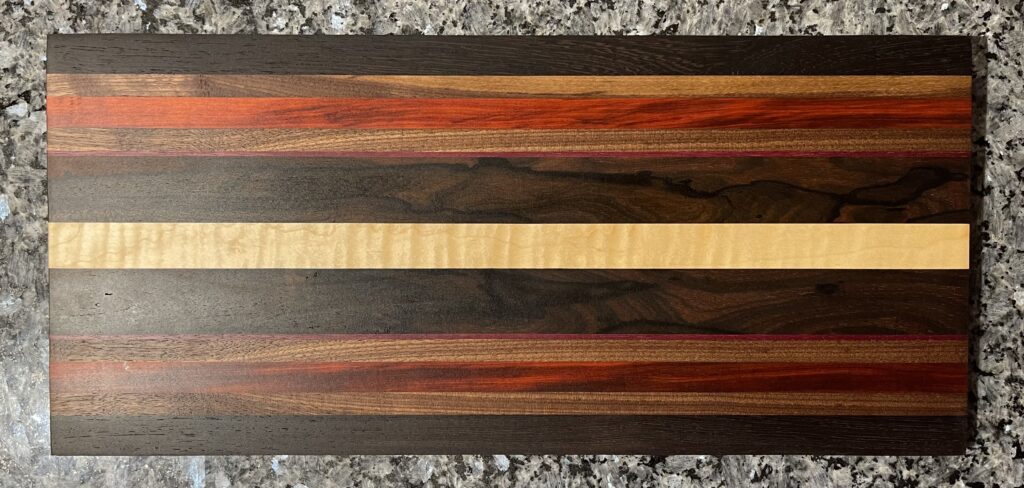
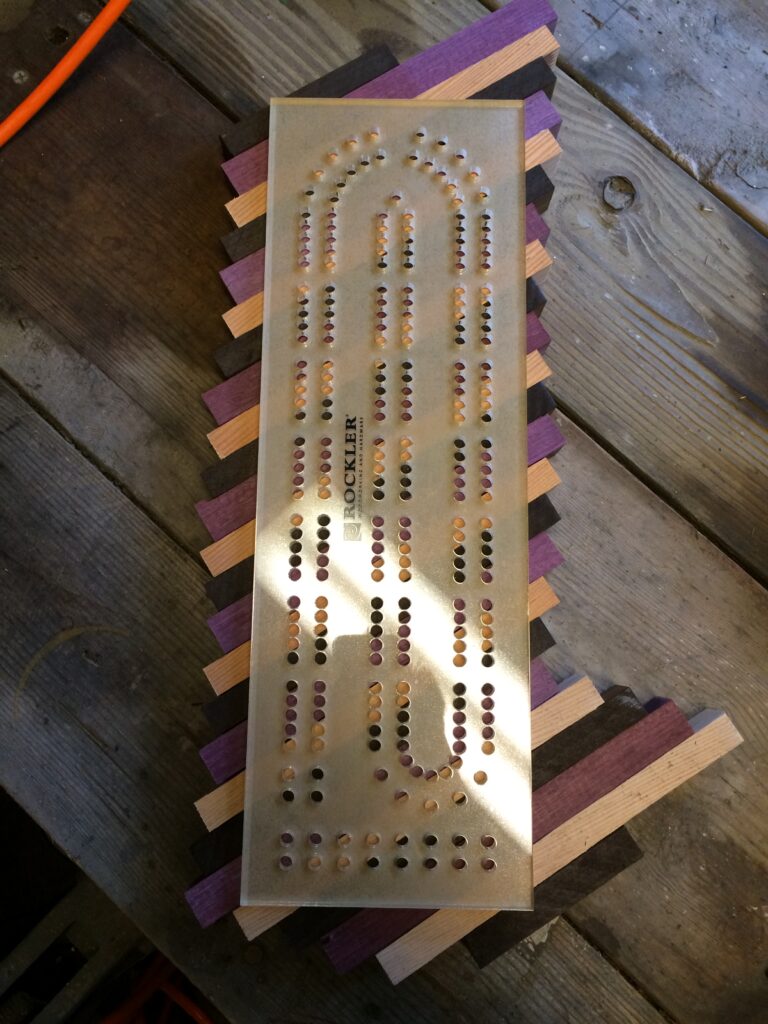
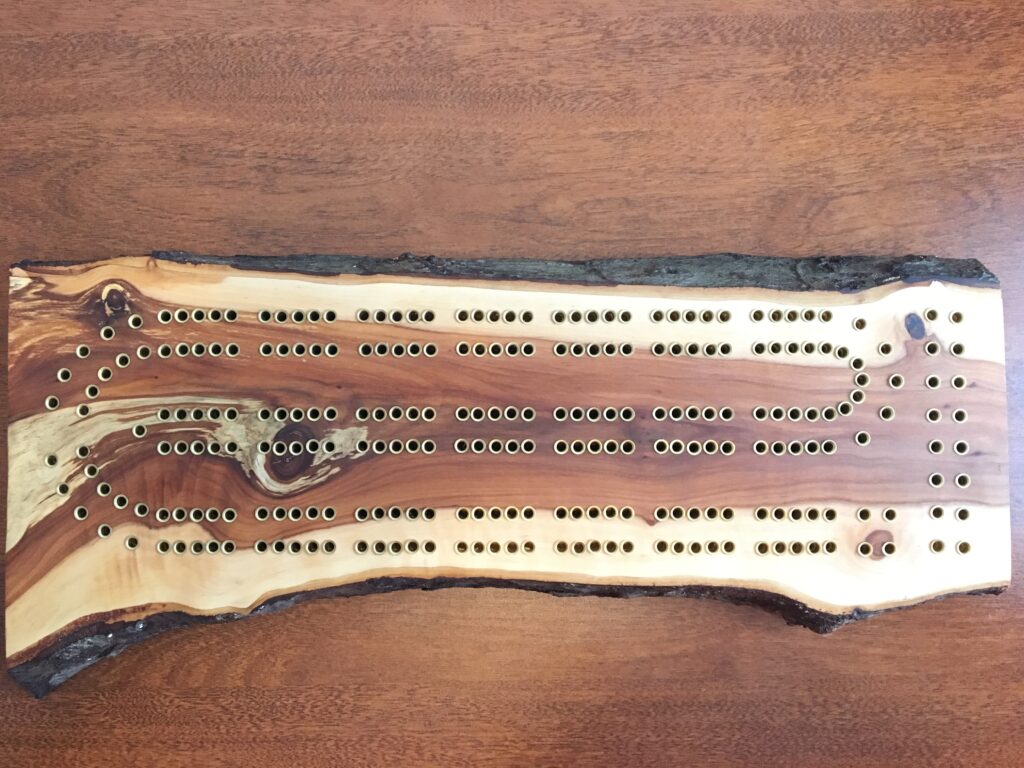
Fast forward to 2015. I still had a love of playing cribbage, but I didn’t have too many people to play it with. One day I got an impulse: I wanted to make my very own cribbage board. I had no idea how to execute this, but I understood that there are a lot of people out there who say that they wish they knew how to do a certain thing but never cared to follow through with it. So, I put a plan into motion in how to make this happen and did some research. I tapped some resources for supplies like a drill press, I bought a few other supplies like glue, a saw, a sander, and a machine planer, and printed out a basic cribbage board template like this one. I went to a local lumber supply store and bought a few different pieces of wood for gradient and color differentiation, then started to cut and glue the best I could. When it was close to completion, I knew I wanted to have cribbage peg storage somewhere inside the board, so with a very long drill bit, I drilled into the end of the board and put a rubber cork in it. Good enough for a first try!
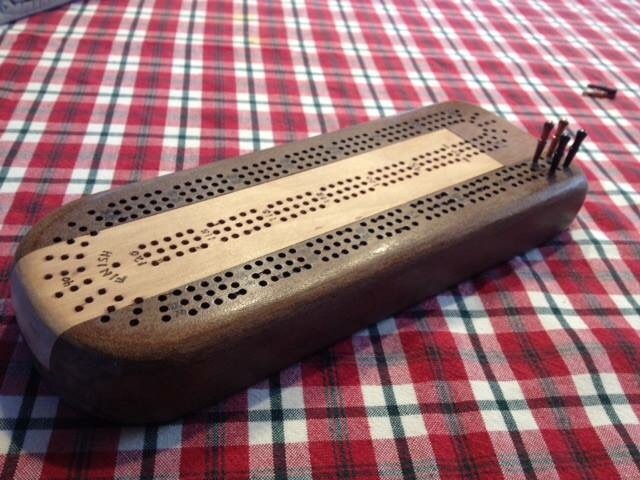
With any first project, my very first board was rudimentary (and heavy!), but functional. The wife of the person who lent me the drill press played cribbage, so I went to their house one fine day, and she skunked me on the very first game! That was uncalled for, but a fair game is a fair game. Sometimes it’s the cards you are dealt that determine your fate, more than using all your accumulated strategy and know-how. If you don’t know how to play cribbage and don’t know what being “skunked” means, then here are some confusing rules on how to play cribbage. If you read through the rules, it may seem like a wacky game, so it’s best to learn from someone who already knows how to play.
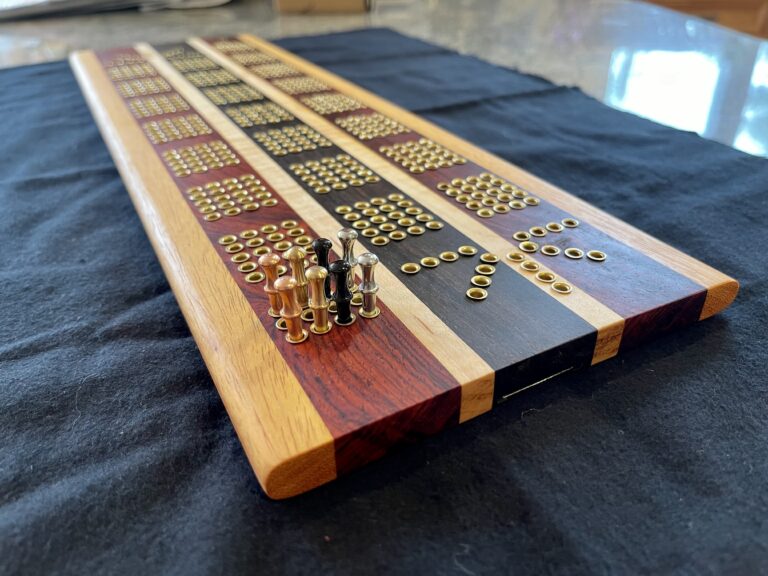
For my second board, I went with different woods yet again, but I turned the woods diagonally for a different effect. I also found someone who sells metal inserts which I placed in all the peg holes, and that became sort of my trademark thing to do. Going forward, almost all my boards had those metal inserts in them. It added a little more time and work, but it was worth it for that neat look.
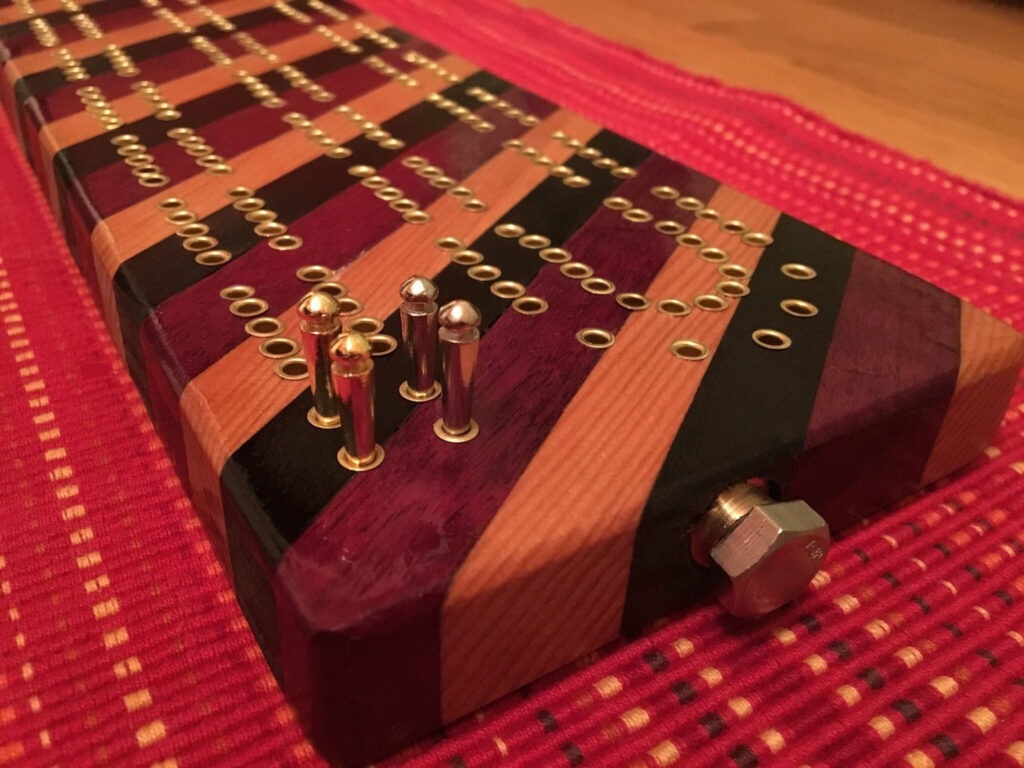
I upgraded my equipment and got better at making cribbage boards as time went on. I scrapped the drill press as it took entirely too long to complete a single board this way, so I purchased a self-centering drill bit for my hand drill. I had business cards made up as well, because I thought that would help. This became my side business, which I did for about ten years all told. It was a lot of fun for quite some time, but around Christmas, it became stressful because I would have a lot of orders to complete in a short amount of time. Towards the end of the ten years, it just became too stressful for me even with making one board, so I lost my passion for it. I hung up my hat, but I still have my first two boards in my possession, plus one I made for my wife when we were still dating.
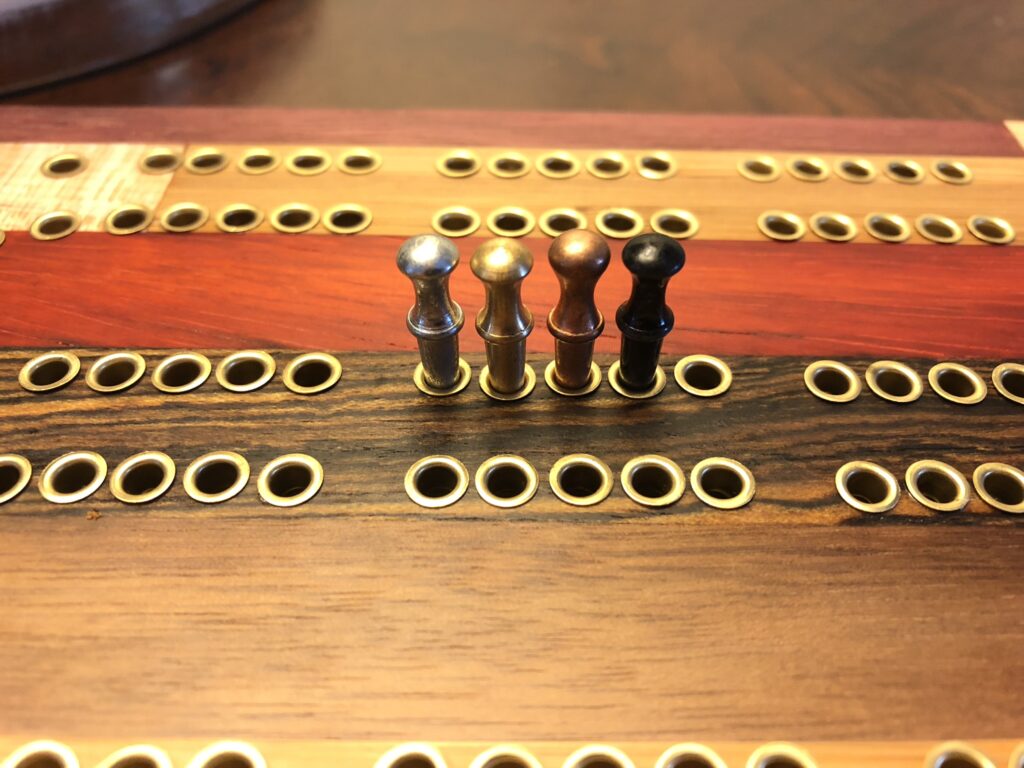
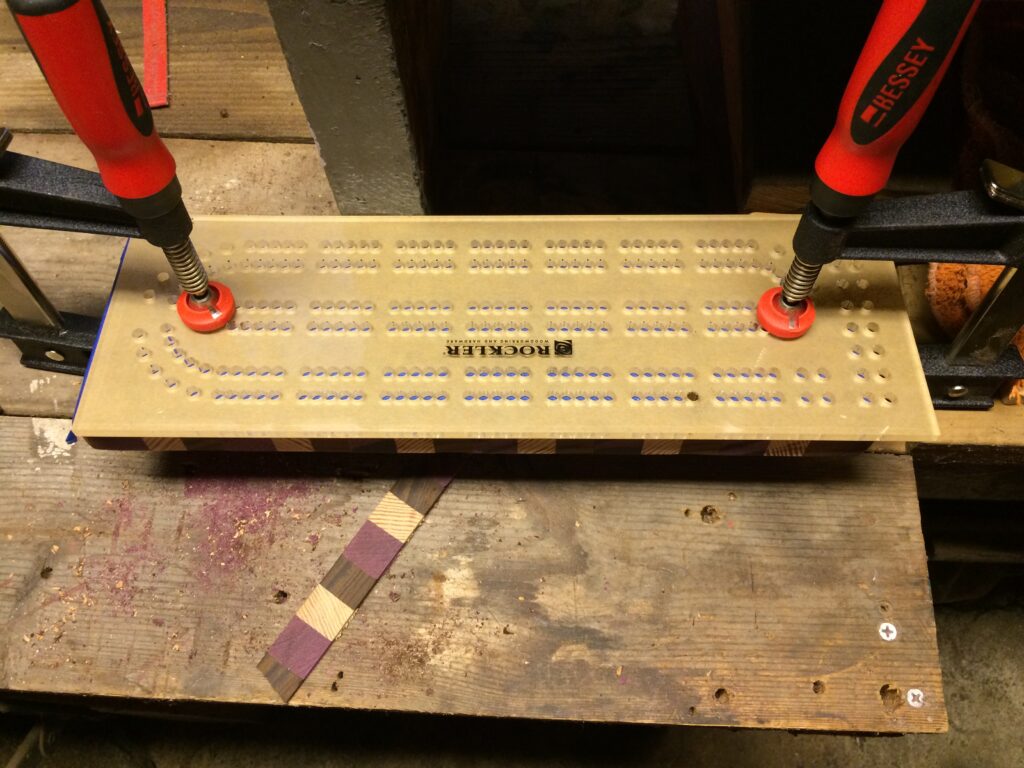
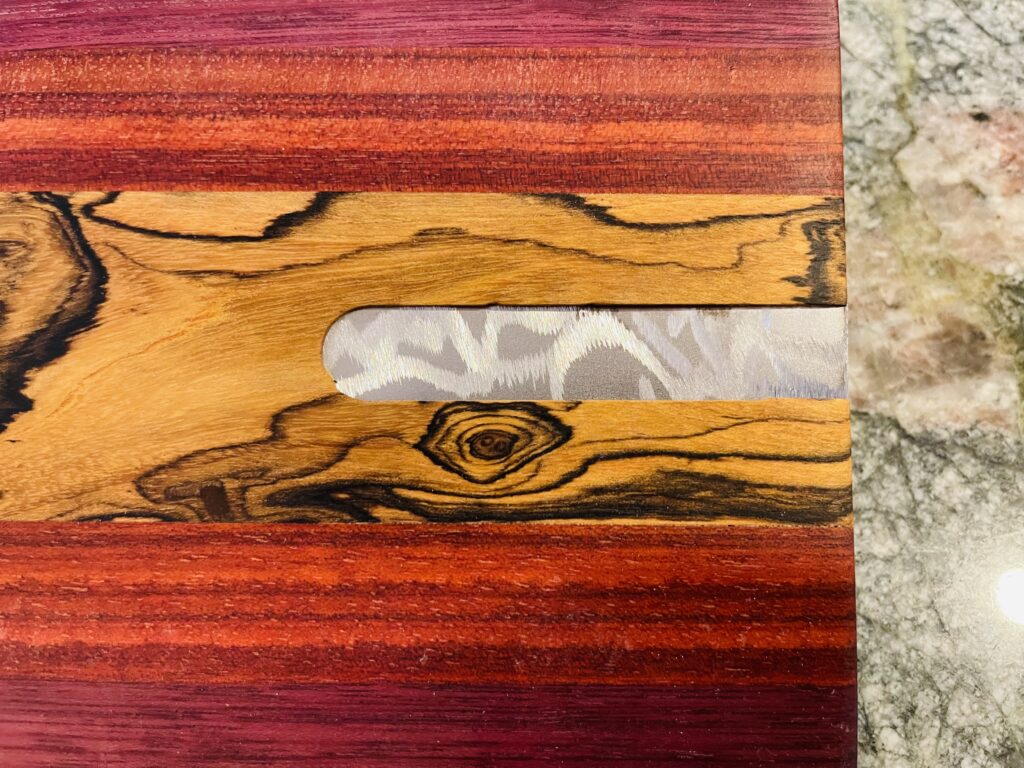
The process of making a board is a little involved: first you choose your woods (or give color options to buyers for them to decide), let them pick if they want a two-, three-, or four-track board as that will determine the final width of the board (I had acrylic templates for each of these), trim your pieces to size, glue them together, and clamp them for a day, trim the ends and run the board through a machine planer repeatedly until it becomes smooth on the top and bottom, route out the board edge and also peg storage with a router and then use a Dremel for the inside edge so the metal sliding plate can slide in and hold the pegs inside, then I would tape the top of the board with blue painters tape and use double-sided tape bits to hold the template to it (the painters tape was to help prevent small tears in the wood when drilling holes and pulling the drill back out), clamp it to the workbench, drill all the holes with a self-centering drill bit which was made for 1/8” bits, then drill them all over again with a slightly larger drill bit so the metal inserts can fit in, sand, use a metal grinder for the sliding metal zinc plate so it fits in the peg storage section, stamp with my personalized email stamp on the back of the board, let that dry for a day, then apply a coat of boiled linseed oil and let that dry for 1-3 days, use a thin layer of paste wax and let that dry for one day, then tap in the metal inserts with a jewelry hammer for the final touch. I would order four colors of metal cribbage playing pegs and would let the buyer pick which ones they wanted. All so easy peasy, right? Each board took a lot of work, so finding a price point for all the effort I would put into making just one board was challenging, just so people wouldn’t balk at the price. This is the woodworker’s dilemma for any project, I feel.
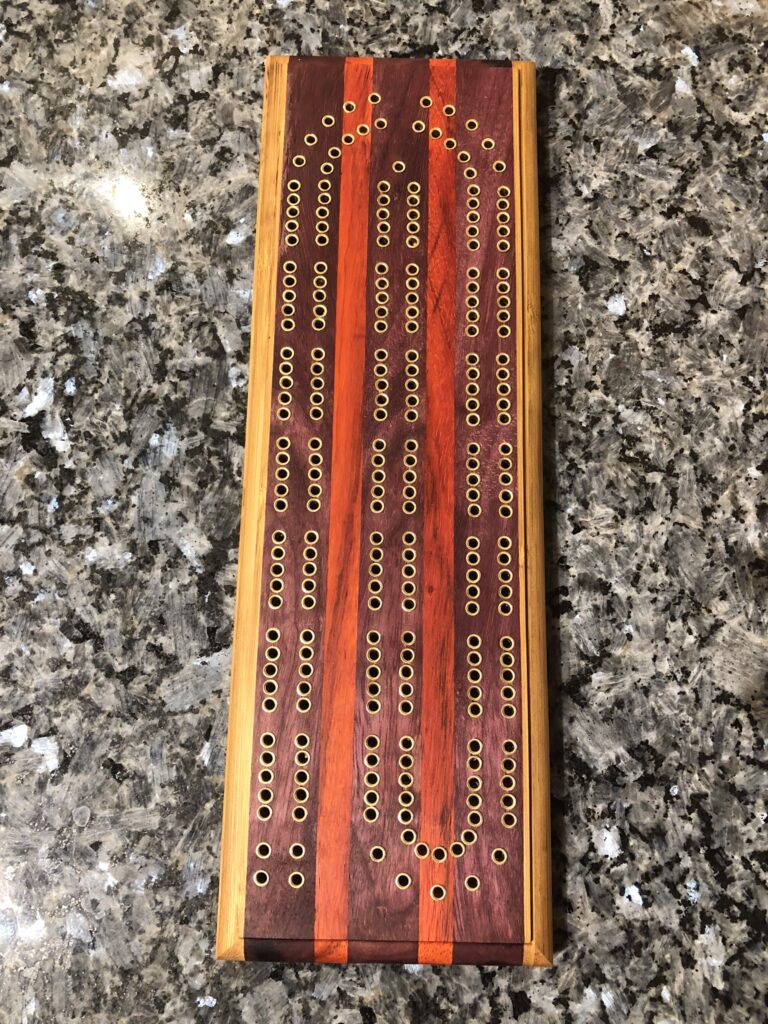
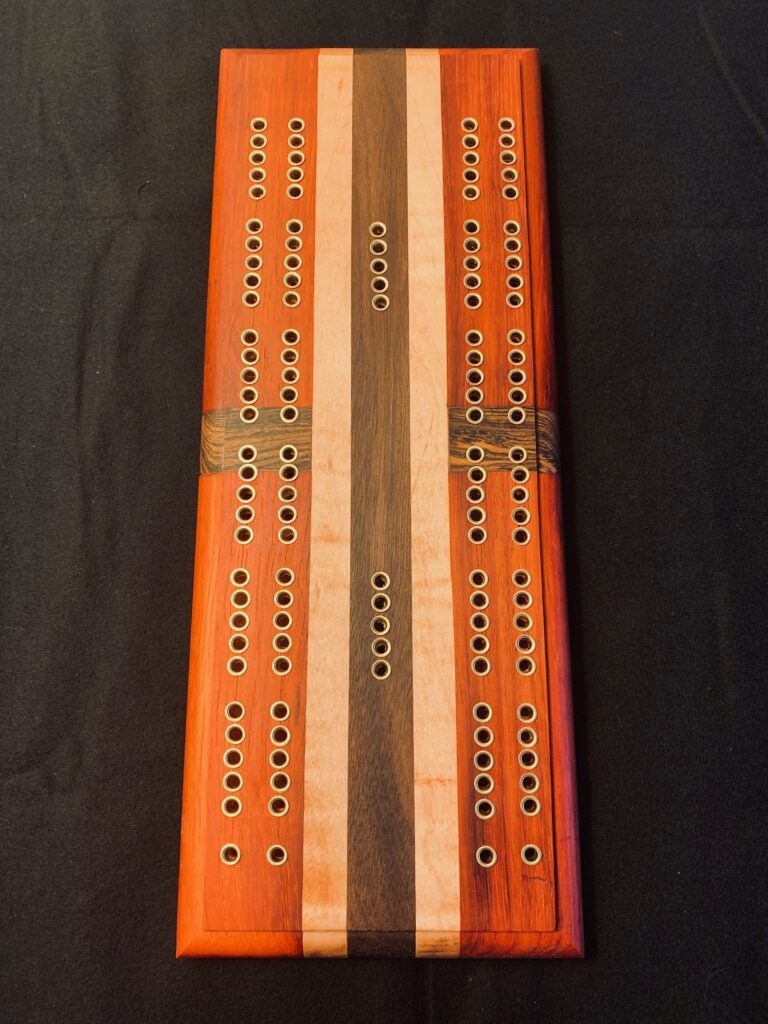
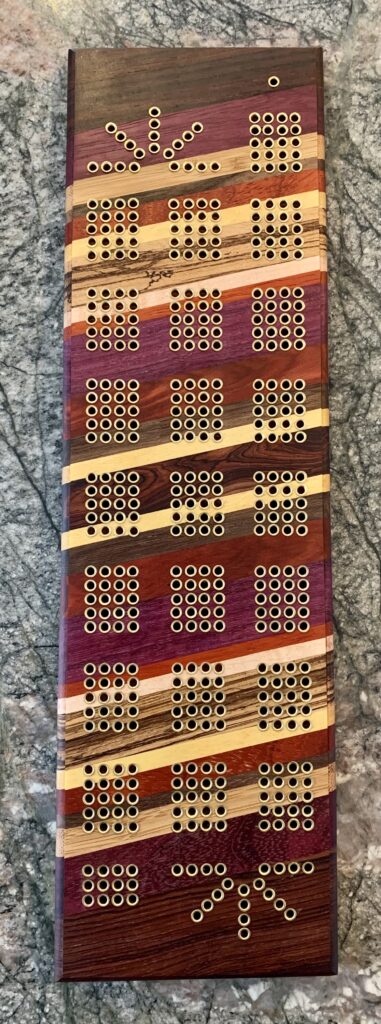
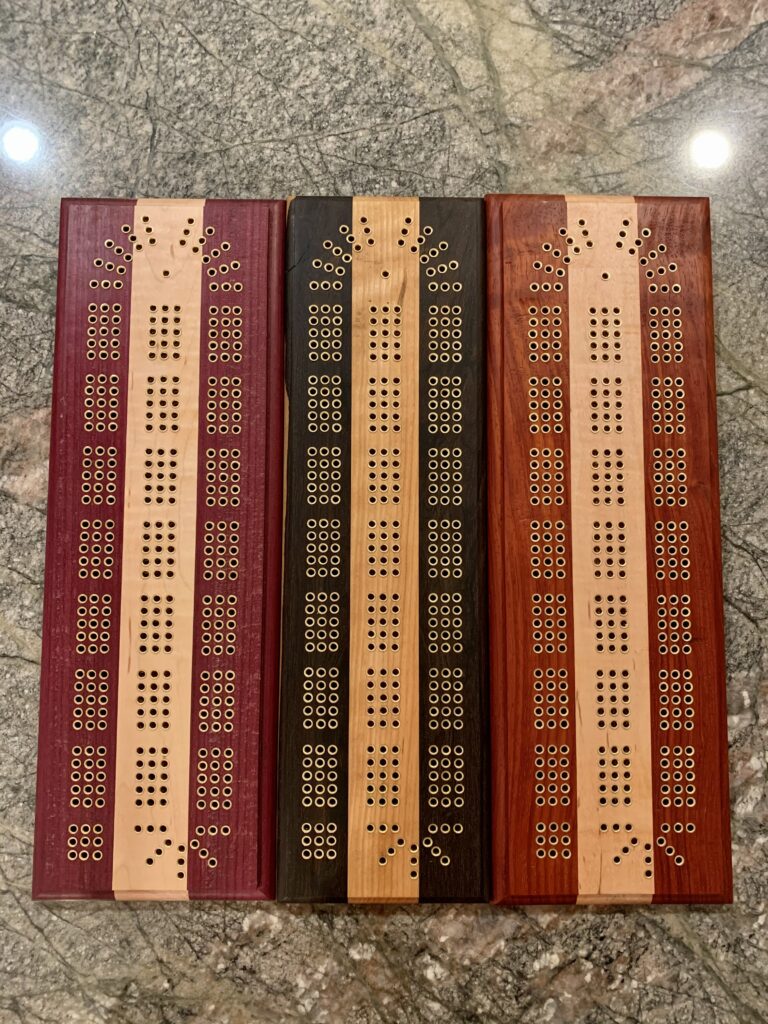
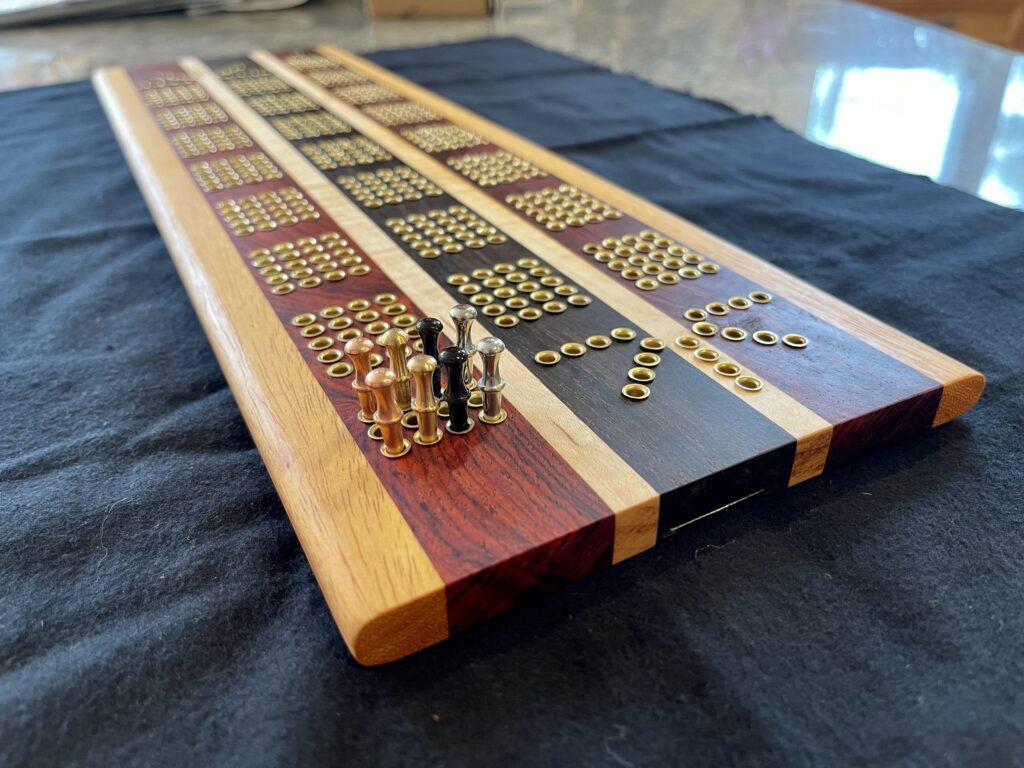
I used to go through a local supplier for my woods; however, their quality would be inconsistent with warping and splintering. If I was going to pay a lot of money for domestic and exotic lumber pieces, I wanted to be able to use as much of a single piece as I could, so I ended up utilizing rockler.com for a lot of the woods and templates. For VERY exotic lumber, I would drive to TradeWinds in southern Vermont for some really gorgeous pieces and stock up.
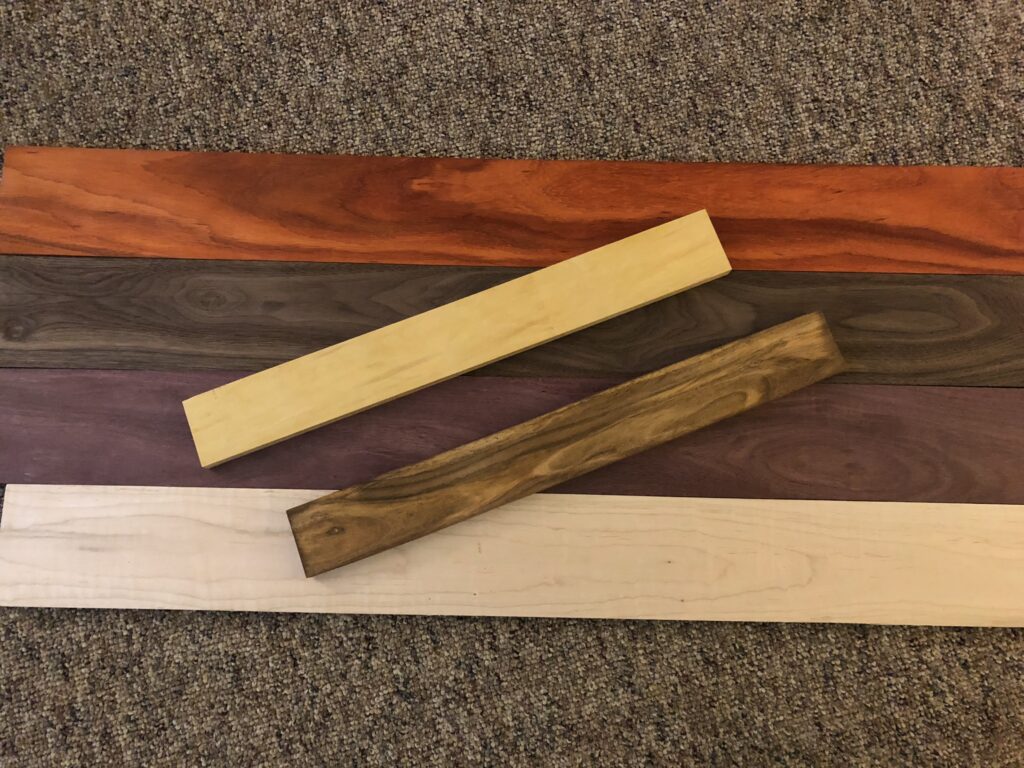
I still have a lot of extra wood pieces in my workshop, so maybe someday I’ll do some more woodworking, but for now, it’s all just sitting down there. Woods I often used were purpleheart, curly maple, padauk, cherry, and walnut, and less often I would use bamboo, zebrawood, mahogany, oak, redheart, yellowheart, cocobolo, ziricote, tulipwood, bocote, Macassar ebony, camatillo, and osage orange. All beautiful woods to work with, with varying densities and a variety of natural colors.
The Janka hardness scale is a measurement determined by how much force is required to embed a 0.444-inch steel ball halfway into a piece of wood. Purpleheart, for example, has a Janka hardness of 2,520 pounds of force, while pine is 380-870, more on the soft side. So, it’s good to know how tough it is to drill into whatever piece of wood you’re working with, especially when you have different woods on a single cribbage board. One of the hardest woods I’ve used would smoke with each hole-drilling.
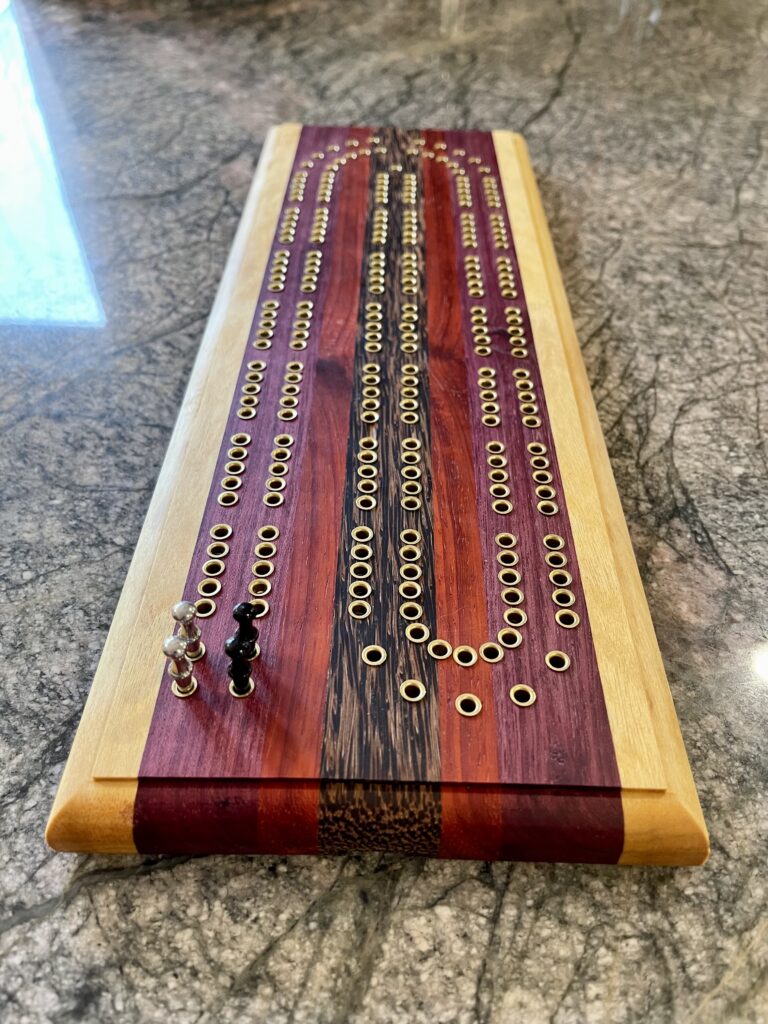
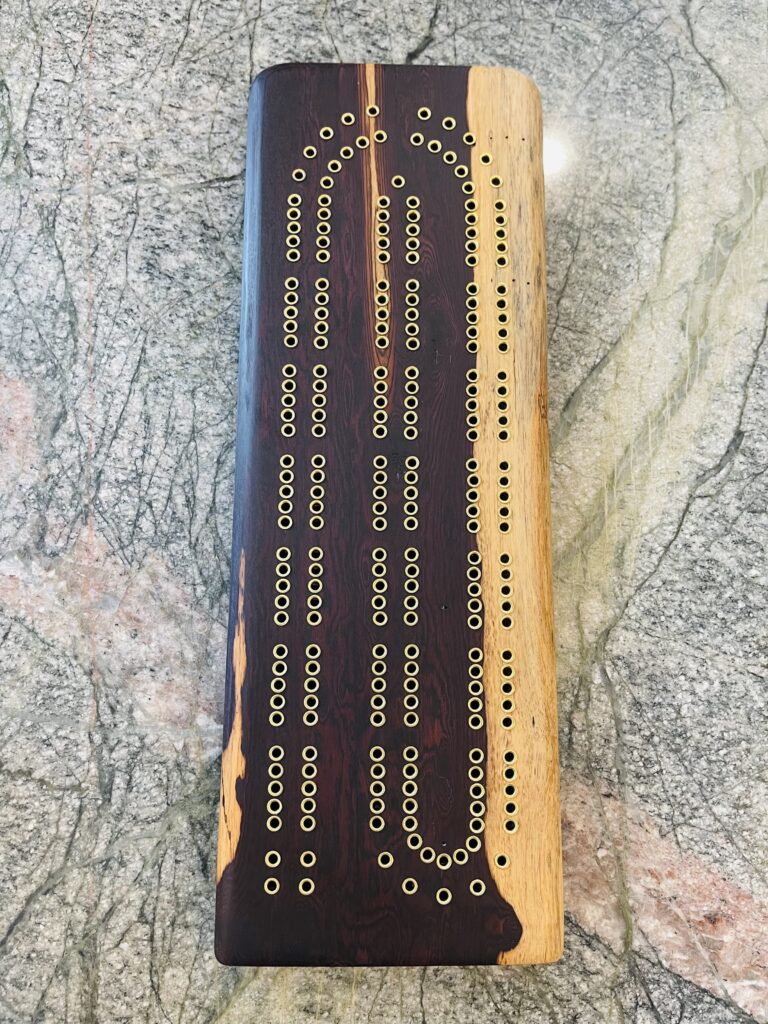
Some other random things to note that I couldn’t include in a streamlined fashion in this blog:
You can play cribbage with three or four players, but the rules change just a little. Those aren’t as commonly seen, but I did get plenty of requests to make three- or four-track boards. Sometimes your local Elk Lodge or other type of lodge will have buy-in tournaments where you play with four players per round.
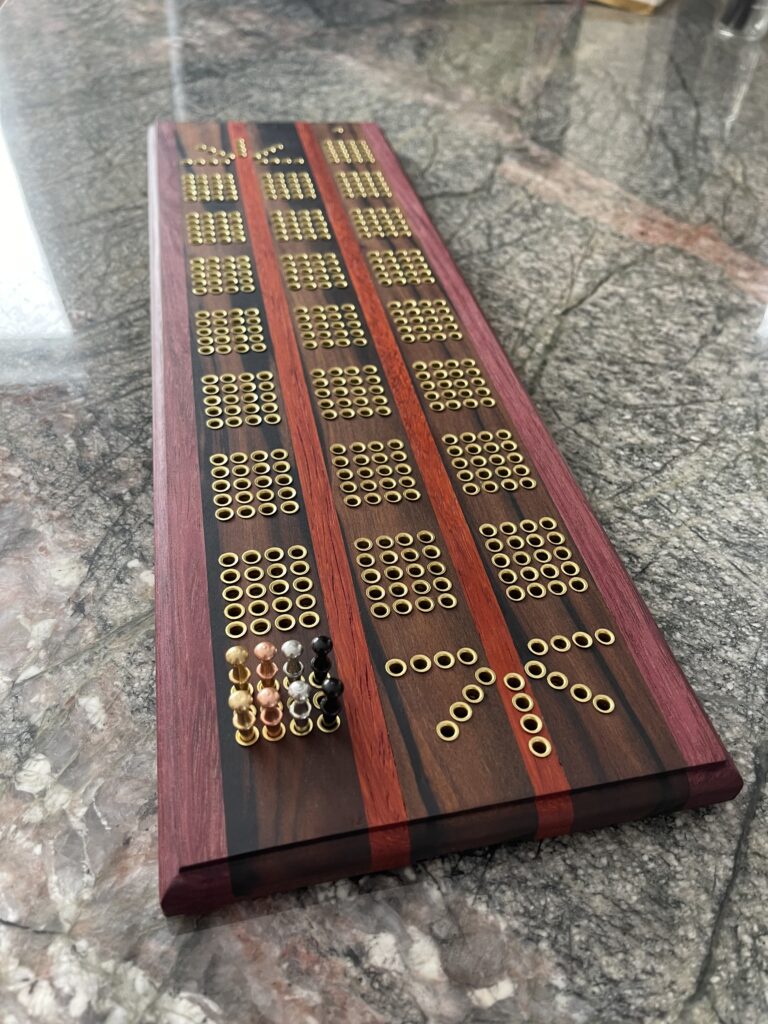
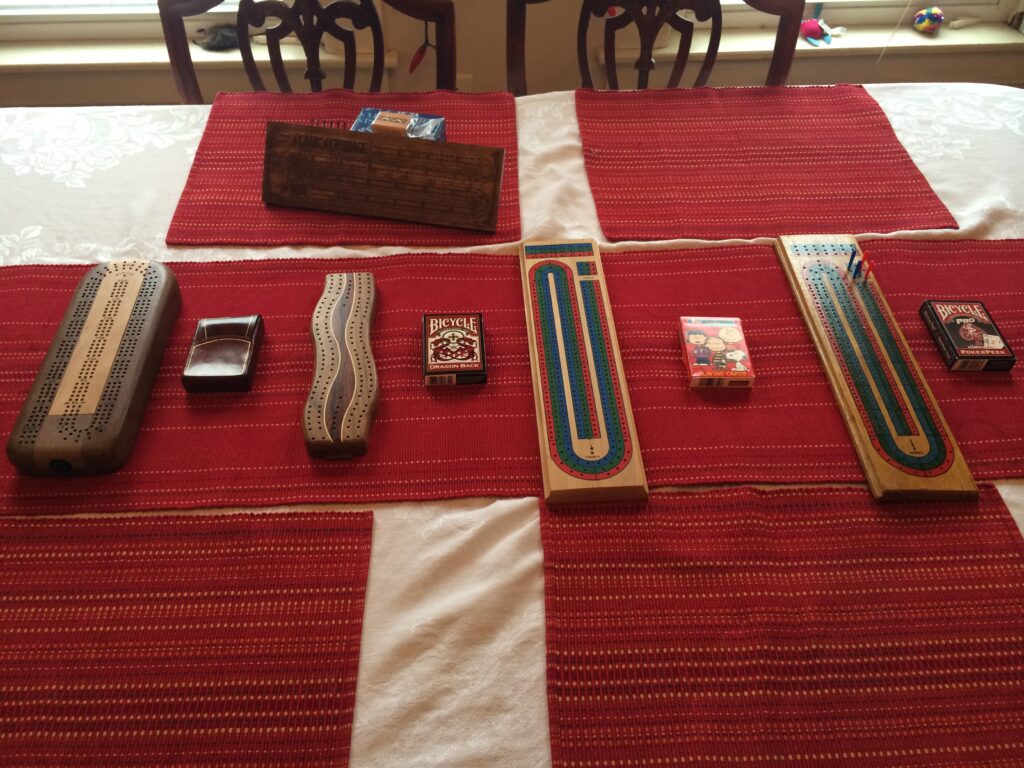
I owned 11 cribbage boards at one point, but I had to cull them as I wasn’t using a lot of them. I still have a handful of them, though.
I keep a smaller travel cribbage board in my car, and I got my wife one as well for hers. You never know where you’ll end up and wanting to play a game of cribbage out and about. This is the one I use and it’s lovely.
My juggernaut board is this one from eBay. It’s simply beautiful and made in India.
If you’re looking to up your game, this short book provides plenty of strategy and plenty of examples. It’s written by a former National Open Tournament cribbage champion: Cribbage for Experts.
I once held a “Cribbage Bowl” on Superbowl Sunday back in 2015(?), starting at 1:00pm. By the time there was a tournament winner, kick off would be starting for the Superbowl. I was never really into football, so this was a great alternative for me. The cribbage tournament was bracketed and with eight players. The winner got to keep a trophy board for one year, which was to be brought back to the next year’s tournament. I did host a second tournament the following year, but it petered out after that.
Thank you for reading, and happy cribbage playing! I’d be more than happy to teach or play cribbage with anyone when time allows; just drop me a line. Please keep in mind though that it’s not how good you are but about having fun while playing casually! It’s a great game to learn.