

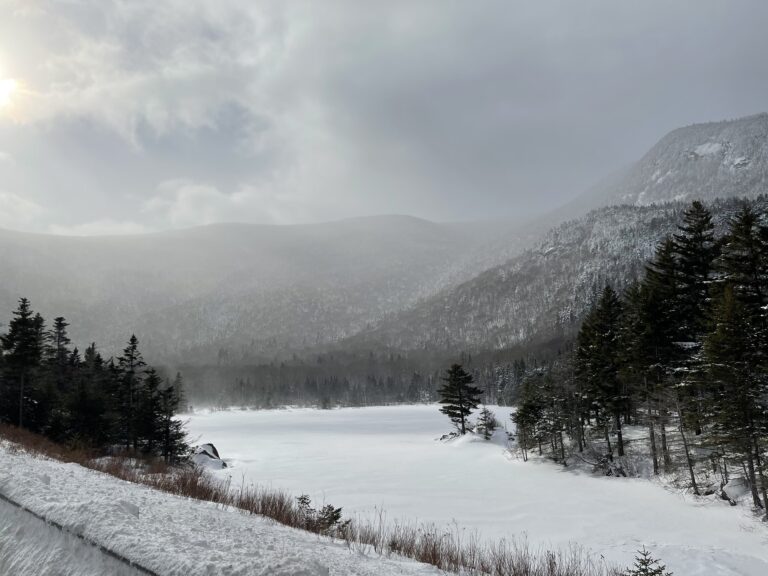
How do you drive in a snowstorm in Vermont? Very carefully. If you already live in New England, you should hopefully already know how to drive in the snow, but when I see cars off the road during a snowstorm, it makes me wonder.
Granted, even the most careful drivers can have car accidents, especially in unpredictable weather, so I’ll talk about some reasons why you need to be extra careful about driving in Vermont and elsewhere, along with some precautions you can take.
First off, my parents will probably laugh at that last statement, because when I was younger, I was NOT the safest driver. I would speed and I liked to do “controlled slides” on back roads when going around a bend (either on a dirt road in the summer or through fresh snow in the winter). I’ve also had my share of speeding tickets and car accidents in my younger days, which I’m not proud of. I wasn’t the most thoughtful driver.
Nowadays, I do drive more carefully, but I still have a little bit of a lead foot, so I rely on cruise control and lane assist. My all-electric car practically drives itself! Ah, technology of the future; we’ve come a long way since we had to manually roll our car windows up ourselves.
These days when it comes to driving in snow, I have not just my life to think about when I’m behind the wheel, but that of my wife and 10-year-old daughter. So, slow and steady it is.
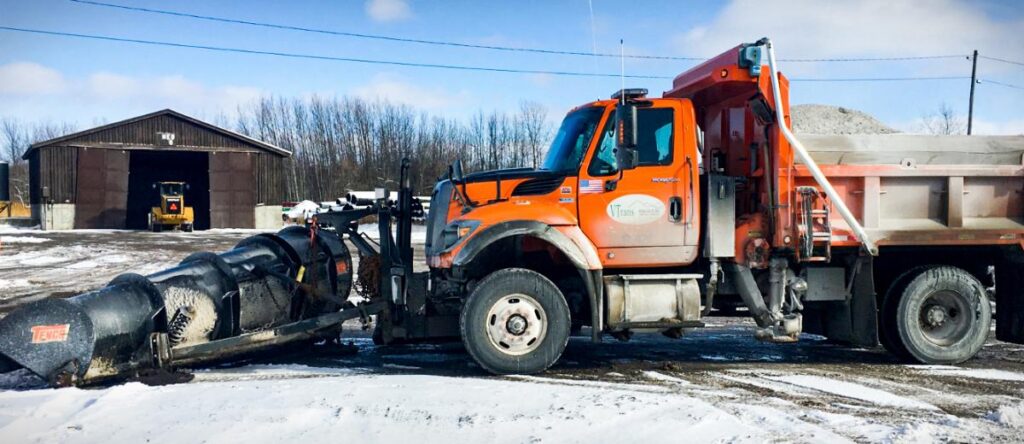
One thing to take into consideration are the Vermont interstate highway snowplows, which can weigh upwards of 80,000 lbs, so drive carefully around them. They will clear the right lane on the interstate first before focusing on the left lane, which means that you’d be passing someone in the left lane while driving through a layer of snow at your own risk. Do you want to try to get to work on time and risk going off the road, or are you willing to drive 50 mph behind someone else the entire way?
Vermont (population of around 648,000 people) doesn’t really have a “bare roads” policy like they claim. This is due to regularly having fewer staff and fewer plow trucks than, say, New Hampshire (population of around 1.4 million people). Because of this and longer roadways, Vermont will take longer to clear the roads, which most certainly affects morning commutes. New Hampshire, on the other hand, has more staff and more plow trucks, and they tend to get the roads plowed in less time.
Next, why does your car warn you about icy roads when it’s 37º out and not when it’s 32º? Because temperatures are officially recorded about five feet above ground, and not in direct sunlight or precipitation. Pavement in the winter can be several degrees colder than official readings. Black ice, a related danger, is so named because it’s transparent and looks just like the road does, and it will take out even the most cautious drivers. Yet another reason to be careful.
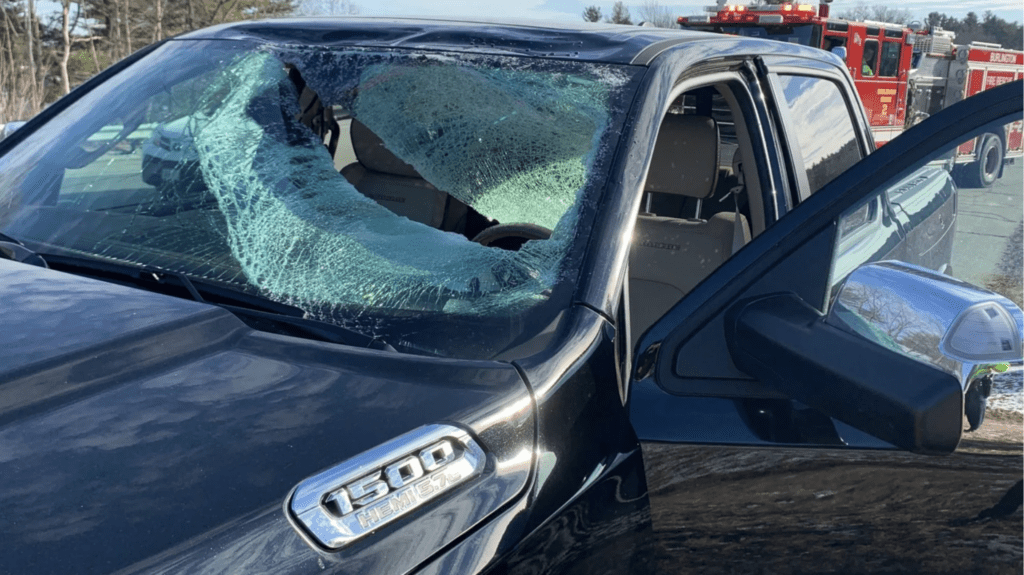
Another road hazard is if you don’t clear the ice and snow off your roof before you start driving. While not illegal in Vermont, it is illegal in New Hampshire and a handful of other states to NOT clear your roof off first, due to Jessica’s Law. Jessica’s Law came about in 1999 after a nine-foot piece of ice flew off a roof in Peterborough, NH, which then smashed into a box truck, which then veered into Jessica’s car, killing her. No matter where you live, it is always good practice to clear as much snow and ice off your roof as you can before you head out. The picture below is not from Jessica’s accident.
What I’ve learned over the years (and please use your own discretion when reading what I’m about to say), is that you have more steering control over your car when you ease off the accelerator, or also when accelerating faster around a corner in the summer (there’s no real reason to do the latter, and do so at your own risk, but it’s just something I’ve noticed. Do NOT accelerate around a corner when there is snow/ice/slush on the road).
If your car is sliding on the road due to ice or snow, it’s important to turn your steering wheel in the direction the back of your car is going, known as “turning into the skid.” If all goes well, your car will straighten out instead of continuing to spin in circles, or worse yet, going completely off the road.
While snow tires won’t do much on ice, they are important to have on your car in New England, as the thicker rubber and winter tread make a huge difference in driving. I swear by Bridgestone Blizzak tires, which are some of the best-rated winter tires money can buy. Sure, they cost a little more, but they are sooooo worth it. It’s better than being dead! One thing to note is that the tread on winter tires typically doesn’t last as long as the tread on all-season or summer tires, so as soon as I think that snow won’t be an issue any longer, I schedule to have them switched out. The longer they last, the more money you save.
I find it’s also good to have reliable windshield wipers as well. Sure, you can get by with the ones your car came with, but I can almost guarantee you that at some point you’re going to be squinting through the window when it’s too cold for the rubber and it gets stiff, leaving two-inch streaks of wiper fluid and road salt in the scope of your sight. I used to rely on the rubber Bosch Icon blades (which I still think are top notch), but over a year ago I switched to Piaa Super Silicone wiper blades, as silicone blades work much better in colder weather, they maintain their flexibility, they resist icing, they leave a thin, water repellant layer on the glass, and they last twice as long as traditional rubber wiper blades. Worth every penny to me. Both types of blades are available on Amazon and on their respective company websites.
Be safe out there! We’re all better off alive, no matter who you are. Plus, that means you can keep reading my blog! 😉

Jared Pendak
Interesting take on winter driving!
Vinnie
Thanks!