

“Life’s too short for fake maple syrup.”
–Vermont
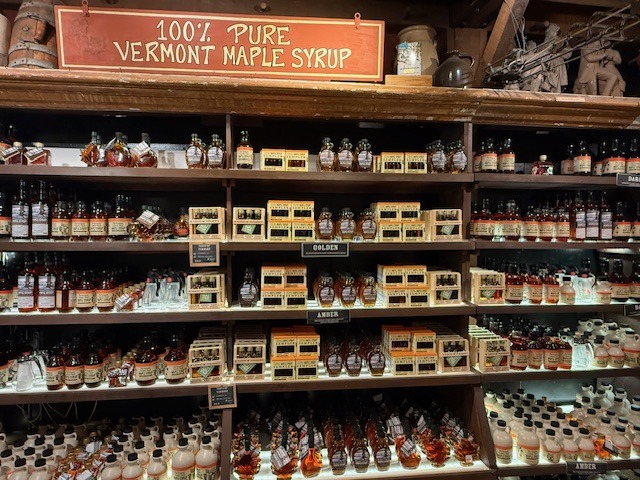
This is a bigger topic than you may realize. Us Vermonters REALLY take pride in our sweet, delicious liquid gold, and we believe it to be the best, never mind the production and quality of it to the east in New Hampshire, to the west in New York, or to the North in Canada. Maple syrup is as Vermont as wearing white socks with sandals, except that only one of those is a tragedy. Vermont is the largest producer of it and is known as the maple syrup capital of the United States, producing over three million gallons of it in 2024 alone! Our state is five times smaller than the state of New York, and they only produced a mere 846 thousand gallons!
Maple syrup production from the sugar maple, red maple, and black maple trees, can be traced back thousands of years when indigenous tribes such as Algonquin, Iroquois, Ojibwe, Abenaki, Mohawk, and Mi’kmaq, would tap trees by making V-shaped incisions in tree trunks and they would use either a stick or a concave piece of bark to have sap run along it into makeshift birch-baskets or clay pots for collection. They would then boil it down to use for curing/preserving meats, as a sweetener for food and bitter medicines, as an anesthetic, and it was also used for trade and in ceremonies.
It was in the 1600s when European settlers learned the process of converting sap into syrup from indigenous peoples and modified the techniques to fit their style. Instead of cutting a V-shape into the tree for example, settlers drilled holes with augers. Sparing you all the technological advancements of syrup-making along the decades and centuries, I’ll just say that during the American Civil War, syrup-makers began to use flat sheet metal pans to speed up the boiling process. It’s very time-consuming no matter how you slice it, as it takes a whopping 40 gallons of sap to make just one gallon of syrup! It’s no wonder why syrup isn’t the cheapest sweetener on the store shelves. The next big technological advancement came in the 1970s when plastic tubes came into common use, which effectively eliminated the need for buckets attached to the trees. These plastic lines brought (and bring) sap from the tree directly to the evaporator house. This was necessary to speed up the process as it saved trips out to the woods.
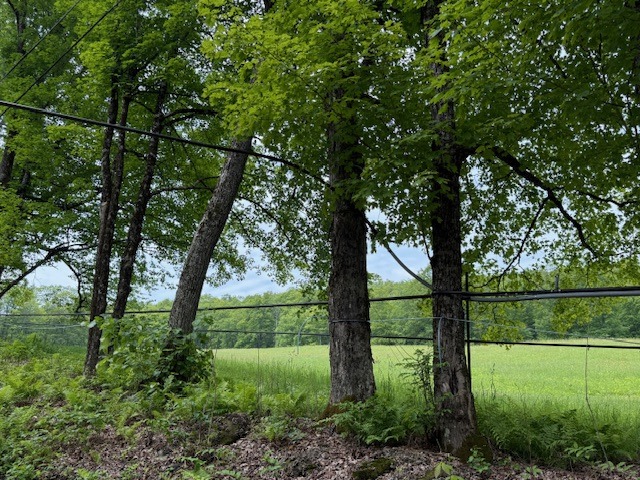
When you drive down certain back roads in Vermont, you might see sap lines going from tree to tree and off into the ether, in case you were wondering what those were. I’m not a big fan of the use of plastic, but until something better comes along, this is what we need to use to help support our state economy.
Let’s briefly talk about the different grades of maple syrup. Four characteristics are used for grading: color, clarity, density, and flavor, and names such as grades A & B haven’t been used since 2015 when the USDA adopted the International Maple Syrup Institute’s grading system. The names currently are as follows: golden (formerly dubbed “fancy”), amber, dark, and very dark. Golden syrup is produced at the beginning of the maple season, amber around mid-season, dark occurs closer to the end of the season, and very dark is produced (you guessed it!) at the end of the season. You can read a little more about the uses for each on this site: https://vermontmaple.org/maple-syrup-grades. I’m ashamed of my Vermont-ness because I honestly thought that the different colors, tastes, and viscosities were due to how LONG you boiled the syrup for. And while we’re on the topic, The Brix scale is what’s used to determine if syrup is legally syrup. One degree Brix is equivalent to one gram of sucrose in 100 grams of solution, and the range for maple syrup must be in the 66°-68° range to qualify.
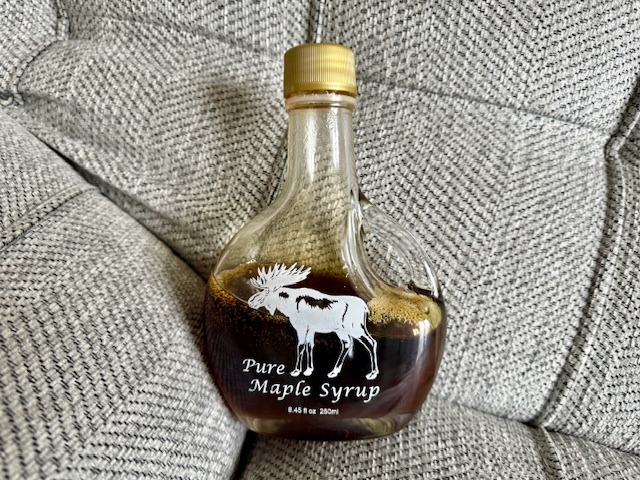
My wife and I buy a gallon at a time at the local general store for $42. The Vermont and New Hampshire gallons sit right next to each other on the shelf there for the same price, but I’m sure you can guess which one we buy! We keep the large gallon in the basement fridge, and we refill a smaller glass maple syrup container in the main kitchen fridge as needed. I used to put sugar in my coffee and yerba mate (please google health benefits of yerba mate as a substitute for coffee), but these days we use real Vermont maple syrup. Now you might be thinking, that’s an expensive sweetener, however it’s very much worth it. Plus, the overall flavor is so much better. We also will always spring for the real stuff if we happen to be in a diner that offers real versus fake maple syrup. To me, fake maple syrup tastes like movie theater popcorn butter and corn syrup, mixed with caramel color. Caramel coloring is a potential carcinogenic and corn syrup has a myriad of health risks (it’s a major contributor to type 2 diabetes and heart disease, among others), but I digress. I was appalled when I found out that my daughter’s elementary school uses either watered down syrup packets, or worse yet, they will also put out corn syrup for use, and it’s labeled as such. I know not everyone can afford real maple syrup, but when you can get your hands on some, it’s very much worth it. There’s a reason it’s called liquid gold. I remember when I was a kid, I would put a little maple syrup in a glass of milk, and oh man was it good!
Before I close this blog out, here are a few other factoids about maple syrup:
- Sap is 2-5% sucrose, which is why it takes so much sap to make so little syrup
- Sap/syrup is nutritious in that it contains the following elements: phosphorus, magnesium, potassium, iron, calcium, manganese, and zinc
- Maple trees aren’t tapped for sap until they’re at least 30-40 years of age
- There are 200+ species of maple trees!
- Sugar season generally lasts for 4-6 weeks, with March being the prime month
- A gallon of syrup weighs around 11 pounds.
- Maple syrup can be frozen as well, and it won’t expand, making it safe to freeze in a glass container
There you have it: your next ice breaker conversation can be regarding what you learned today about maple syrup. You too can come across as a Vermonter!
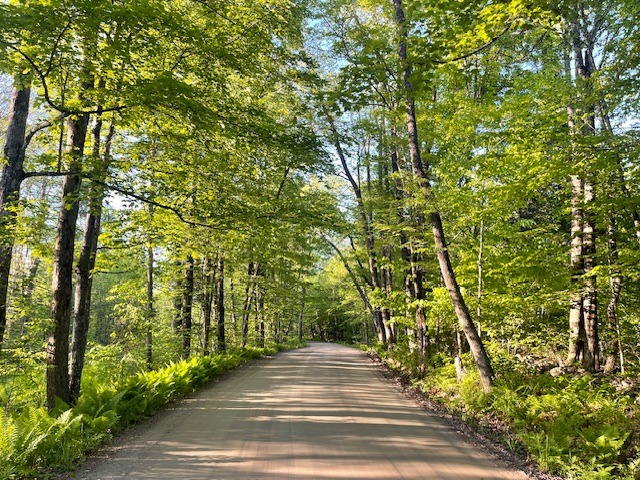
Next week, I’ll discuss how lovely it is to live on a dirt road!

Ellen Gabhart
Love this! And, like you, I’m a Vermont maple syrup gal!
Vinnie
Thanks!
Sandy Clark
I loved your article pn maple syrup, ii was born a vermonter , soent 18 yrs in virginia and came home in 1986 ! In Virginia you can rarsly find vermont maple syrup and i do dearly love it !
Vinnie
Good to know! I knew you guys were down there at some point.
Justin
Yo! Informative article, Cuz. Craigers makes syrup every year. Were you aware of this?
Vinnie
Ah, no I didn’t! And glad you enjoyed reading it! I learned some things along the way as well.