

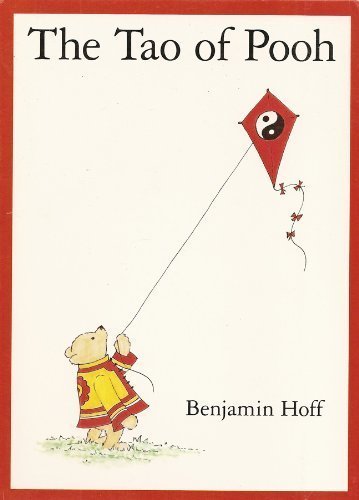
One of my favorite easy-to-read-but-still-deep books is The Tao of Pooh by Benjamin Hoff (a link to the entire book for FREE is here), which you may or may not have read at some point in your life. If you couldn’t gather from the title of that book, the concept of Taoism is explained with the help of Winnie the Pooh (the beloved character created by A.A. Milne). A simple definition of Taoism is that it means living in harmony with the universe. And then there’s a crucial component of Taoism, which is Wu Wei.
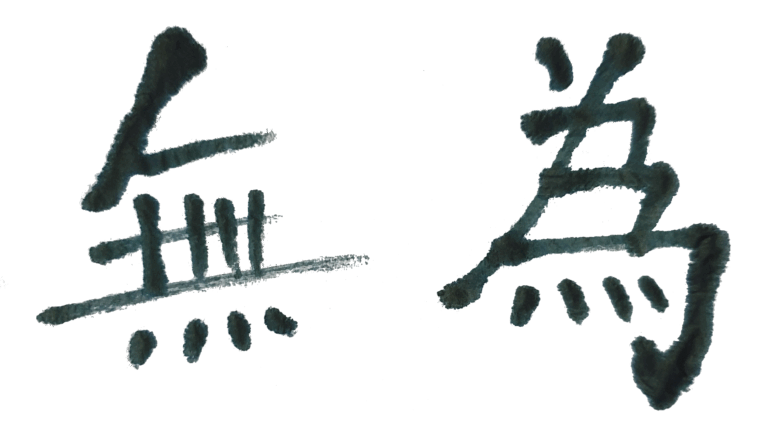
In the Chinese language, the term Wu Wei literally means “not doing,” but for elaboration, there’s a good quote from this site that says that “Wu Wei is a foundational concept in Taoism, an ancient Chinese philosophy that emphasizes living in harmony with the Tao, or the fundamental principle that underlies the universe. Translated as “non-action” or “effortless action,” Wu Wei encourages individuals to align with the natural flow of life rather than resist or manipulate it for personal gain. This philosophy advocates for a life of acceptance, where one refrains from imposing one’s will on the world and instead embraces the unfolding of events as they naturally occur.”
Another good quote from The Tao of Pooh explains Wu Wei in a more simplified manor (and with fewer words): “The efficiency of Wu Wei is like that of water flowing over and around the rocks in its path—not the mechanical, straight-line approach that usually ends up short-circuiting natural laws, but one that evolves from an inner sensitivity to the natural rhythm of things” (Hoffman, pg.68).
Essentially, it’s necessary to leave your ego at the door and literally just “go with the flow.” You’re still accomplishing what you need to get accomplished, but you’re not forcing anything. The square peg does not go in the round hole; it goes in the square hole.

You may remember briefly learning about Sigmund Freud’s id, ego, and superego in school. The id is more instinctual, the ego deals with reality, and the superego is the moral conscience.
Internal conflicts affect your behavior, and sometimes when you make certain decisions, the outcome may be different based on what part of yourself you listen to more. Are you making a decision based on your gut, or are you muddying the waters with your mind? Essentially, why manufacture resistance if it’s not necessary?
Clever Rabbit from Winnie the Pooh is a prime example of ego getting in the way. He always seems to have the answers and wants to lead the way, but in the end, trouble still seems to ensue for the gang when they’re on an adventure.
The term “it is what it is” seems to have more of a Westernized feel, and it has a different connotation. “That’s life,” “c’est la vie,” “so be it,” “let it be,” “what’s done is done,” etc., are some similar phrases, but they all boil done to the same thing: an acceptance of the situation. But what are the different ways to interpret the term?
As a general rule of thumb, I do NOT use ChatGPT or other AI platforms for my blogs; I write my blogs myself. However, I wanted to investigate the different interpretations that ChatGPT would have for “it is what it is,” just for fun. So, this is what it came up with, word for word:
- Philosophical Acceptance.
This is the Zen or Stoic interpretation — a miniature expression of amor fati, the love of fate. Things are as they are; resisting them only adds suffering. Used this way, it’s a statement of peace with reality.
- Emotional Detachment.
Sometimes it’s self-protection. People use it when they can’t fix something painful or unfair. “It is what it is” becomes a shield — a way to prevent further emotional investment when the outcome’s already written.
- Resigned Fatalism.
In less healthy usage, it can signal defeat. “It is what it is” might mean, I give up — nothing can change. That interpretation leans toward nihilism, a shrug toward futility rather than acceptance.
- Social Evasion.
It’s also a conversational escape hatch. Someone might drop it to end an uncomfortable discussion — a polite way of saying, I don’t want to talk about this anymore, and you can’t make me.
With all four interpretations of “it is what it is” (except maybe for the first one), it’s clear that there’s a note of finality, of giving up, whereas you could say that Wu Wei moves beyond that finality and continues to finesse life with a dance. You could say that both approaches admit that reality has its own patterns, but one submits to passive surrender and the other allows you to continue floating on down the river instead of getting stuck on a sandbar and admitting defeat.

How does this apply to our lives? Well, I can say from personal experience that there have been countless times where I was having trouble letting something go, i.e. a situation that I created or something else that affected me negatively. In either affectation, I could embrace (and have embraced) the “it is what it is” philosophy and say what happened, happened, as much as I beat myself up over it. No, I cannot change the past; this much is true. To move beyond that and learn more from it, however, I can consider everything that happens and has happened as a part of life, and we (hopefully) learn from our mistakes. Keep on floating down the river.
Is this the same as going with the flow? Perhaps, perhaps not. But at the very least it means not giving up. It means carrying on with your life. It means that if you generate resistance, then you will get stuck at some point.
What are your goals in life? How will you reach them? Do goals matter at all if you’re simply floating down the river to see where life takes you? I think a good starting goal is to look within yourself to see how much resistance you already create within yourself and in the world, and how can you change those inward and outward expressions? I say deflate that ego of yours to allow yourself a fresh viewpoint on pretty much anything and everything.
Please take seven minutes to watch this YouTube video on how to incorporate Wu Wei into your modern life: https://www.youtube.com/watch?v=DHKkzr2Gp8s.
It’s never too late to grow as a person. If you take a moment to reflect on your words, actions, and more importantly, your thoughts, change will come, but it will take time and patience. Since your thoughts can manifest positive or negative outcomes, it’s important to recognize that it’s your ego that creates resistance and conflict. That’s how you get stuck on the sandbar of life.
Let that shit go and let yourself be free from the constraints of the mind. Or at least start that journey. None of us are perfect and none of us will ever be perfect, but that journey towards a less stressful life while still accomplishing the same goals must start somewhere.
To end this segment of me talking from a soapbox, I’m reminded of a joke that makes me chuckle every time I tell it. It’s a reminder to not take yourself so seriously as you wander through your life:
What did the Buddhist say to the hotdog vendor? Make me one with everything.
